Farm Driveway Excavation Built Wide Enough for Real Equipment
A lot of farm entrances start the same way - a narrow, rutted path that was never really built for anything bigger than a pickup. Once you start running tractors, combines, or grain carts through, things get ugly fast. The banks cave in, water pools, and what used to be a passable lane turns into a muddy mess every time it rains.
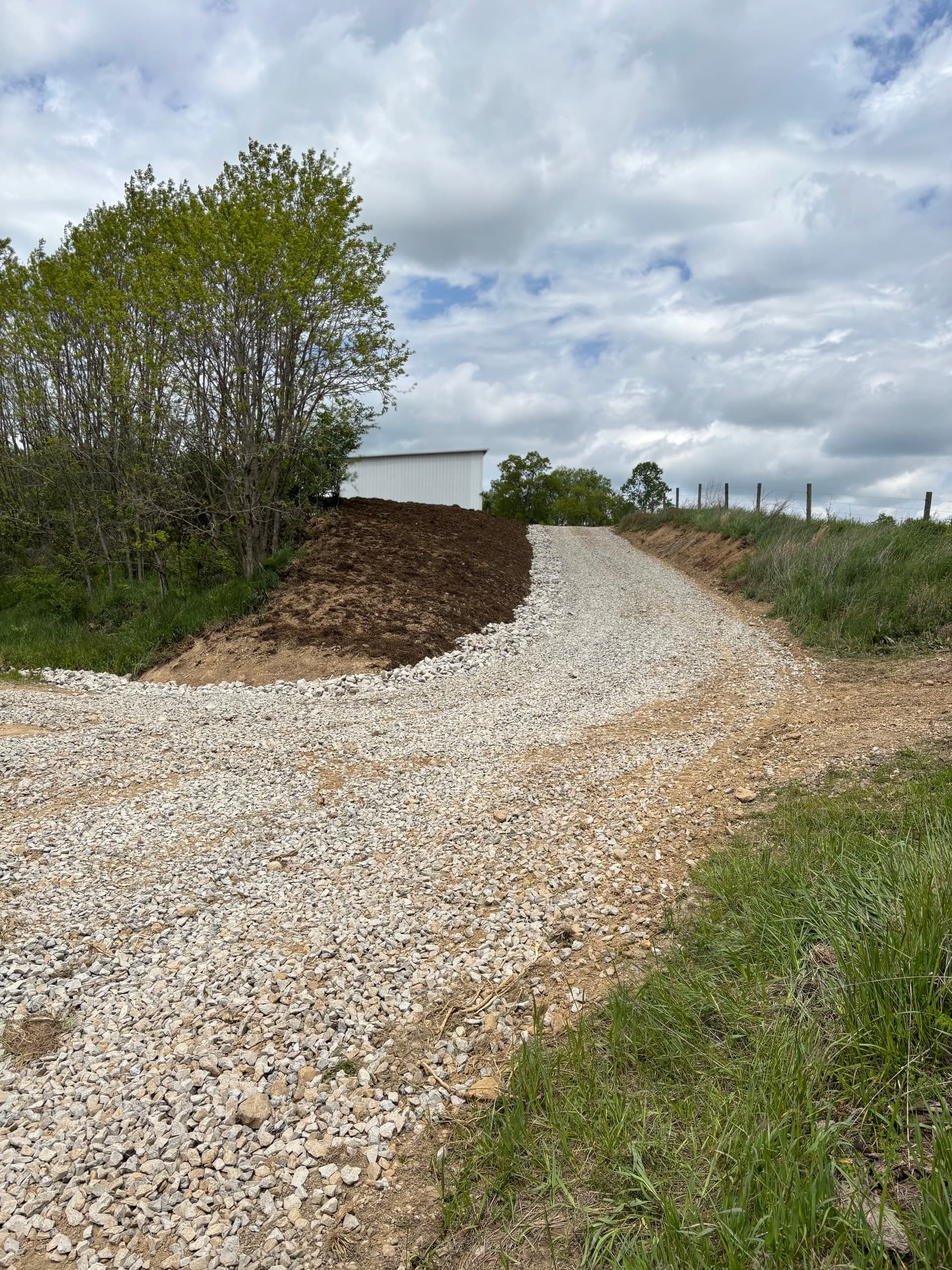
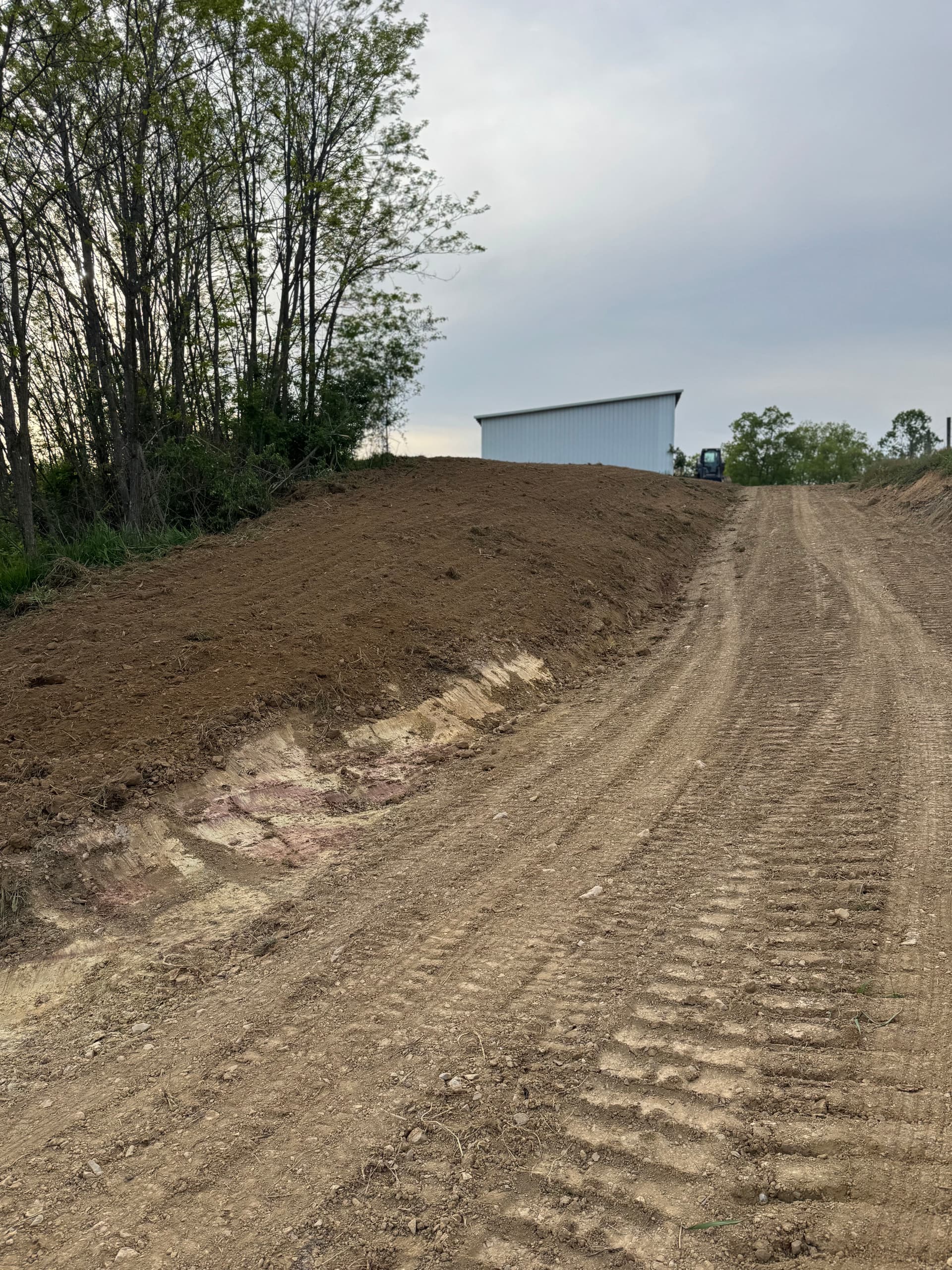
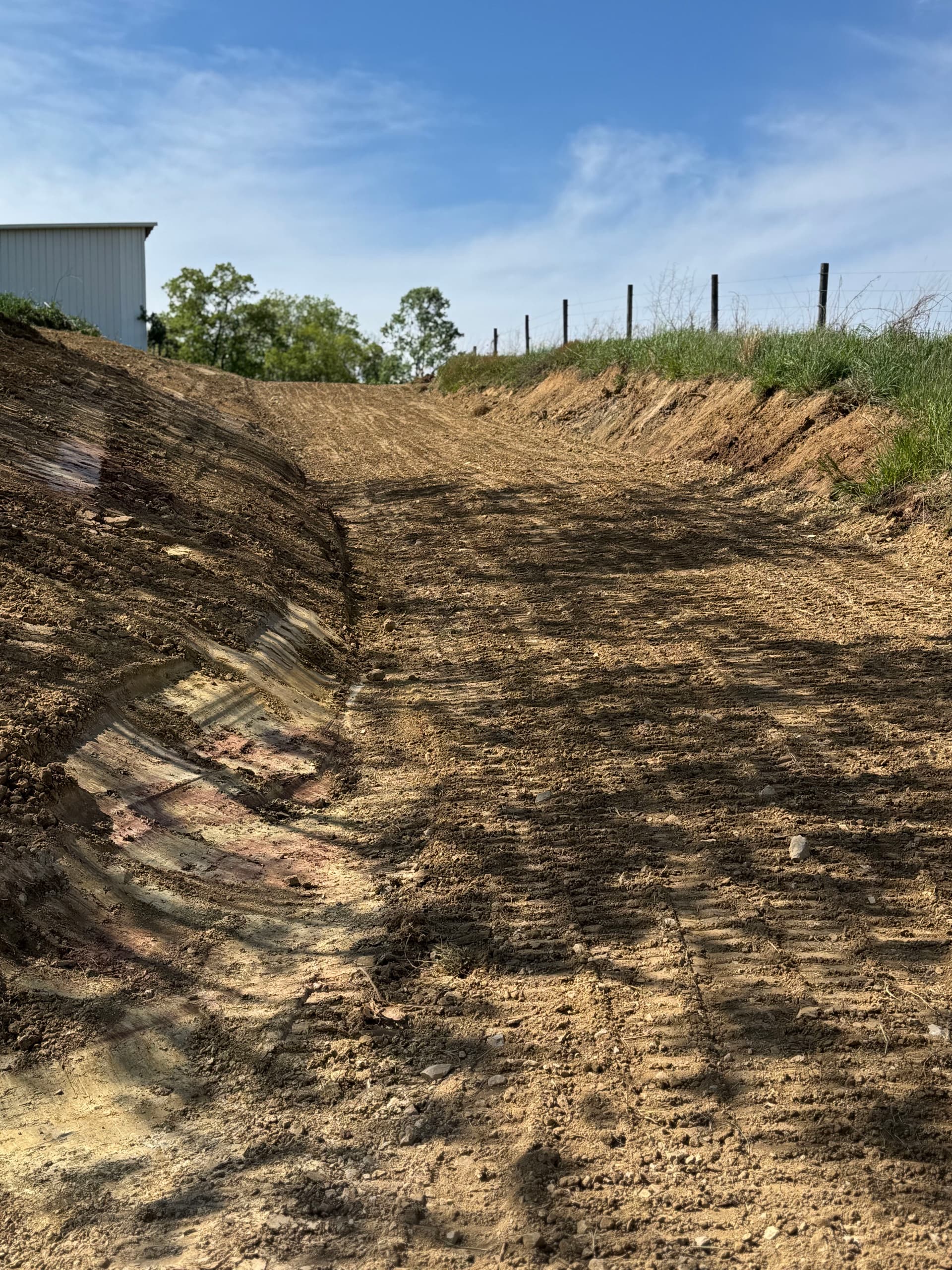
Here's what we were working with on this one: a tight access road leading to a pole building that needed to handle full-size ag equipment. The bank was too steep and too close to the travel lane, water had no clean place to go, and the whole thing just wasn't wide enough to work safely. We sloped the bank back to a stable grade, cut in a proper drainage ditch along the edge, and opened up the lane width so equipment can actually get in and out without hugging the shoulder.
That ditch matters more than most people realize. Without it, runoff from the slope just piles onto the driving surface and starts breaking things down from the edges in. Cut the ditch right, and you're directing that water away before it becomes a problem. We finished the exposed bank with seed and straw to hold things in place while vegetation establishes - because a bare slope is just erosion waiting to happen.
Once the grading and leveling work was solid, we brought in fresh crushed stone and surfaced the whole lane. Clean, tight stone - the kind that compacts well and doesn't disappear into the mud after a few heavy loads roll through. The end result is a driveway that's actually built for the way the property gets used, not just patched up to last another season.
Whether you've got a narrow farm entrance that needs to be opened up, a washed-out lane that keeps getting worse, or a new driveway that needs to be done right from the start - this is the kind of work we do. Road and driveway excavation, grading, drainage, stone - all of it done with an eye toward how it'll hold up long-term.